
31 July 2026
Hydration breaks, heatwaves and resisting AI
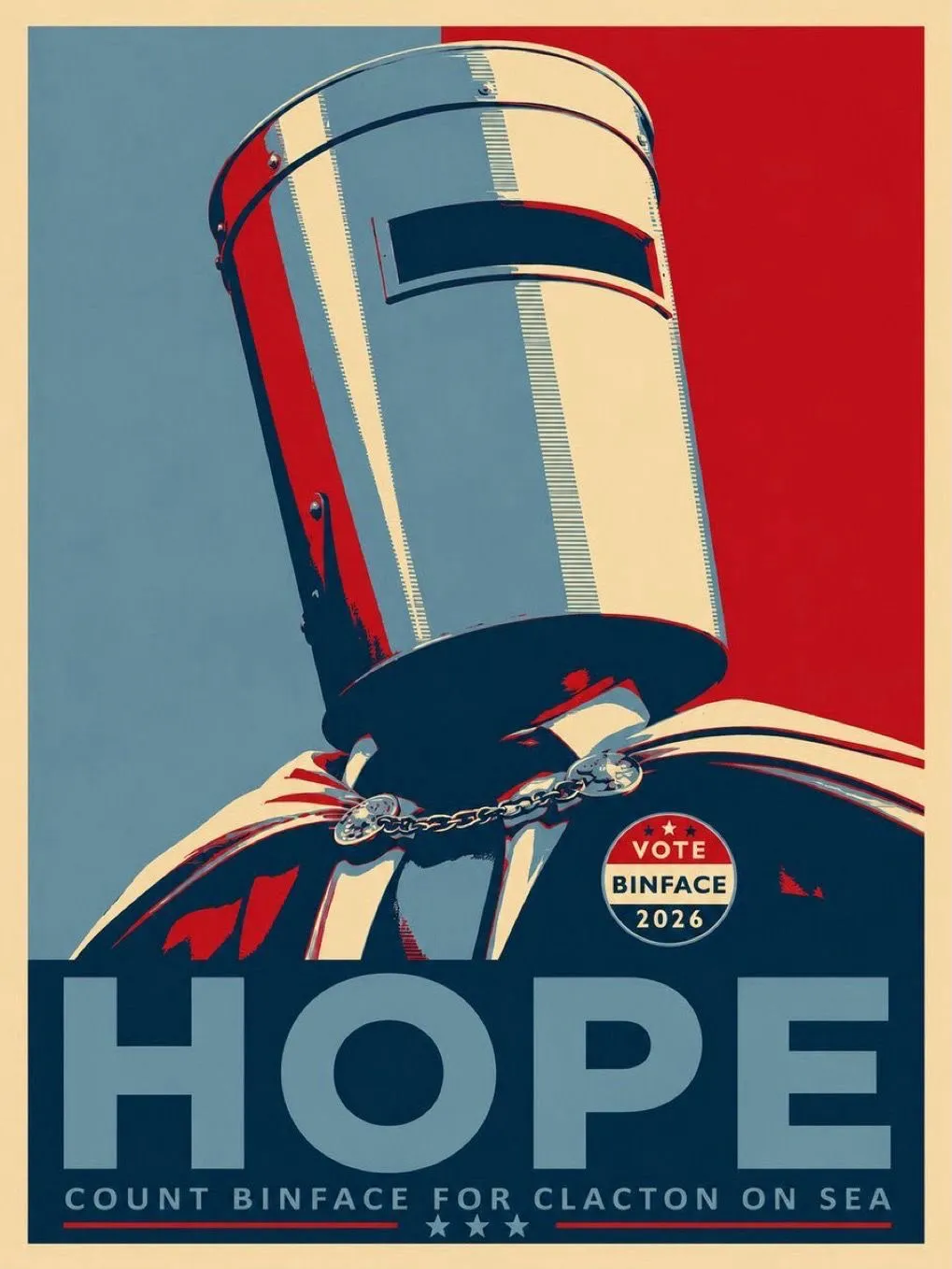
In month where the heatwaves continued, “hydration break” became a catchphrase and the main source of amusement was an upcoming by-election, I was delighted to see that the Oxford Clarion had found a local angle on the big political story.
They wrote: “An Oxford classics graduate has won cross-party endorsements in the upcoming Clacton by-election.” The man behind Count Binface, it turns out, studied at Corpus Christi.
New word of the month
I have hated “staycation” for a long time. Now I’ve found something worse. Among the proliferation of social media ads for air-con, I saw one promoting holidays somewhere further north than the UK. It used the word “coolcation”. Please make it stop.
What I’ve been reading
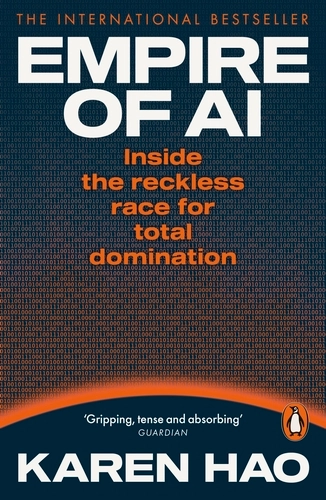
At a time when AI companies are wondering whether their invention might go rogue, they might be better wondering when their bosses might go rogue. That’s the impression I got from Empire of AI by Karen Hao, a deeply detailed look at the history of OpenAI.
The author, a business and tech journalist, describes a management culture that is secretive, incoherent, toxic, untrustworthy and even abusive. It doesn’t inspire confidence in the future of the technology.
The book is subtitled ‘Inside the reckless race for total domination’, which sums it up. As does the main title, because, argues Hao (and she’s not the first), the AI industry model in the US is rooted in colonial ideology. Exploiting other people and countries for their own benefit, yes, but also the idea that they alone have the moral authority to make decisions about where all this is going.
This week, I was dismayed to hear someone on Newsnight talking about how AI might solve the problem of climate change. That may have once been an aspiration, but it’s now just propaganda. (And actually, we already know what to do about climate change. We’re just not doing it.)
The statistics in the book about the environmental cost of the industry are mind-boggling. If you haven’t got time to read a book, check out some recent headlines:
- Not enough water for UK’s datacentre plans, trade body says
- Microsoft’s carbon emissions went up 25 percent last year
- Google’s exponential path to climate-wrecking digital bloat
It’s easy to feel angry, but there are some positive messages:
- Despite the hype, none of this is inevitable.
- Artificial intelligence is a collection of technologies that takes many forms. Generative AI is just one part of it. There are other things we could be doing.
- It doesn’t have to be like this. There are hopeful case studies describing smaller, more useful AI models and a diversity of approaches.
- We need to ask how AI shifts power – for example in the areas of knowledge, resources and influence. Then find ways to redistribute that power.
My takeaway: “We can all resist the narratives that OpenAI and the AI industry have told us to hide the mounting social and environmental costs of this technology.”
My other takeaway: would you trust someone who, after meeting a potential colleague, says “we had an extremely high-bandwidth interaction”
More AI news
Just a few random headlines from the past month. I’m sorry to be focusing on AI so much, but the news just keeps coming.
The AI Resist List was launched this month. The aim is to promote “examples of ways communities around the world are moving against extractive AI and exploring more equitable technology futures”.
LinkedIn now allows you to tag a post as “Seems like AI slop”. This has been welcomed with some delight by many users. Others have questioned the motivation behind it.
Ethical Consumer’s latest magazine is an “AI and big tech special”, an in-depth report which includes ideas for ethical alternatives.
Earlier this month, Instagram users found out (and NOT because Instagram told them) that Meta’s new AI image generator would be using their public Instagram photos unless they opted out. Three days after the feature’s release, Meta decided that maybe it wasn’t such a good idea. File under #PRfail.
Substack (which I use) has caused controversy by introducing a tool that will let readers check whether a writer has used AI in their posts. An AI tool. There’s a backlash about this too, with many writers disabling the function.
At the beginning of July, a small publisher, Bona Books, has blogged about how they “accidentally bought an AI story”. At the end of July, The Bookseller reported that “a crime novel has been pulled from sale by an agent after securing major six- and seven-figure deals in the US and the UK due to AI allegations.”

Non-tweet of the month
It’s got to be Count Binface’s election manifesto. Number 11 is: “A windfall tax on cosy crime novels written (‘or written’) by celebrities”. As a newbie author, who didn’t find it easy to get published, I fully endorse this.
Pictures of the month
The featured picture on this blog post is an indication of how climate change is affecting us. I’ve been picking blackberries in my garden since June.
On a happier note, here’s a photo from my recent visit to Oxford Westgate library. It’s always a thrill to see my book in bookshops but it’s almost more of a thrill to see a library copy.
